
How a Good LMS Can Help You Sell More Online Courses
The online course market has matured. Buyers are more selective. Competition is intense. Content quality is no longer the only differentiator. Platform experience now determines whether prospects convert, complete, and purchase again.
A Learning Management System (LMS) is not just a content repository. It is the operational backbone of your education business. It affects acquisition cost, conversion rate, retention, and lifetime value.
For professionals and decision-makers, selecting or building the right LMS is a revenue strategy, not a technical afterthought.

How a LMS Technical Architecture Influences Sales
Most course providers focus on marketing funnels and pricing. They invest in ads, webinars, and email campaigns. Yet many ignore the platform layer that processes and retains demand.
When an LMS is well designed, it reduces friction, improves trust, and creates structured upsell paths.
When it is poorly built, marketing efforts compensate for systemic inefficiencies. The difference shows up in margins.
An LMS must handle multiple tasks at scale. It manages authentication, payments, content delivery, analytics, and progress tracking.
If the technical foundation is unstable, growth stalls. Let’s see better how this applies:
– Quick guide to online payment systems
Front-End Performance Shapes Conversion
Online buyers evaluate platforms within seconds. Slow load times reduce trust and inconsistent interface behavior creates hesitation. Mobile instability drives abandonment.
High-performing LMS platforms rely on structured front-end architectures that support dynamic content without sacrificing speed.
Approaches grounded in scalable component systems, such as those used in Angular development, demonstrate how modular design enables complex learning interfaces to remain responsive even as features expand.
The practical value of this approach lies in state management consistency, predictable navigation, and maintainable growth without technical debt.
When a course catalog expands from five programs to fifty, architecture matters. Without it, each new addition increases instability.
Checkout Flow Determines Revenue
Conversion friction often hides inside payment steps.
Redirects to external gateways, unclear confirmation messages, and delayed access reduce purchase completion.
A strong LMS integrates payment processing directly within the learning environment.
The user moves from decision to enrollment without confusion. Confirmation appears instantly. Access begins immediately.
This continuity builds confidence that increases completion of the purchase process.
– Features of an e-Learning platform
Scalability Protects Growth
A marketing campaign can double traffic overnight.
If the LMS cannot handle concurrent users, downtime damages reputation. Refund requests rise. Support tickets multiply.
Scalable infrastructure prevents this failure. Cloud-based deployment, load balancing, and optimized database queries support sustained growth without interruption.
Professionals evaluating LMS platforms should test performance under stress, not just under average traffic conditions.
The Importance of User Experience for Business Growth
One of the most powerful ways an LMS impacts business performance is through user experience.
Completion is directly tied to revenue growth. User experience directly affects upsell probability.
Learners who complete courses are more likely to purchase additional programs and recommend the experience to others.
Completion depends on engagement, and ease of use.
When navigation feels confusing or progress tracking is unclear, abandonment increases — and so does lost revenue.
An effective LMS ensures that:
- Lessons are logically organized
- Progress is clearly visible
- Navigation feels intuitive
- Mobile access works seamlessly
Note that mobile responsiveness is especially critical. A large portion of learners access training through smartphones or tablets.
– How to create mobile learning courses in the right way
Mobile-ready LMS = Higher Completion Rates
If an LMS is not optimized for mobile devices, engagement drops sharply.
A responsive LMS ensures video playback, quizzes, and assignments function smoothly across devices.
Mobile reliability expands the addressable audience and improves accessibility for global markets.
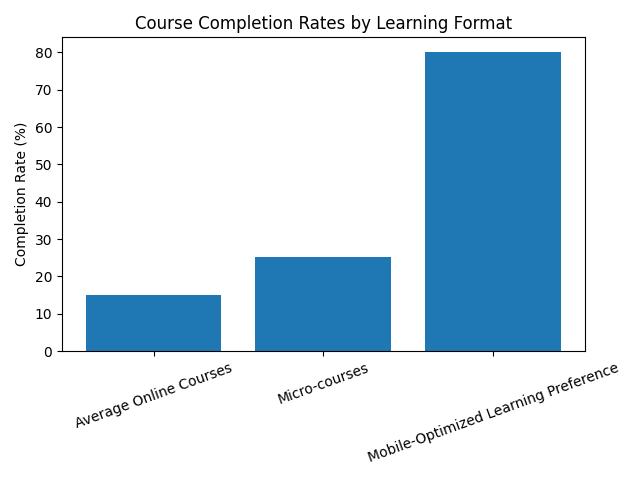
Industry data indicates that average completion rates vary significantly depending on course design and follow-up engagement: paid courses tend to perform better overall, and mobile-friendly or gamified content increases retention.
- General Online Courses (paid/average): 15% average completion rate
- Micro-courses: 25.1% completion rate
- Mobile Optimized Users (respondent preference): ~80% say mobile improves completion
Personalization = Engagement
Personalized dashboards improve retention. When learners see recommended courses, reminders, and progress summaries, engagement increases.
Data-driven personalization relies on integrated analytics.
The LMS must track behavior, performance, and interaction patterns. These insights enable automated recommendations and cross-sell offers.
Personalization converts passive learners into repeat customers.
– How to retain customers for your online courses
Reasons Why a LMS Must Have Customer Data Analytics
An LMS generates rich behavioral data. Decision-makers who leverage this data outperform competitors relying on intuition.
Analytics can reveal important data like which modules cause drop-off, identify high-performing instructors, show which marketing channels generate long-term customers rather than one-time buyers.
The most important LMS-driven revenue metrics include:
- Course completion rate
- Average time to completion
- Repeat purchase rate
- Drop-off point within checkout flow
Monitoring these metrics enables targeted optimization.
For example, if learners consistently exit during a specific module, improving that content increases overall completion and upsell potential.
If repeat purchases are low, bundled offers or structured learning paths may be required.
Automated Reporting Supports Decision-Making
Manual reporting slows strategic response. A strong LMS integrates real-time dashboards accessible to leadership teams.
Decision-makers can monitor revenue per course, cohort engagement, and performance by geography. This visibility supports faster adjustments to pricing and promotion strategy.
Data transparency shortens the feedback loop between marketing and operations.
A Great LMS Supports Your Marketing Strategy
A good LMS does not operate in isolation. It integrates with marketing automation, CRM systems, and email platforms.
Integration creates seamless transitions between acquisition and learning.
Also, a professional LMS supports your brand through:
- Custom branding
- Landing page integration
- Cohesive and customize visual identity
- Social Networks integration
Brand consistency across landing pages, checkout, and course dashboards builds cohesion. Visual continuity reinforces professionalism.
If a prospect clicks an offer link and lands on an inconsistent interface, doubt arises.
Retargeting Based on Behavior
Behavioral segmentation improves sales efficiency.
Learners who complete 80 percent of a course but fail to finish may respond to targeted nudges. Those who purchase introductory programs may be ready for advanced modules.
An LMS with integrated segmentation capabilities enables automated campaigns triggered by progress milestones.
This automation increases revenue without proportional increases in marketing spend.
– Email automation: how to use it in your marketing campaigns
Go For a LMS That Allows Monetization Flexibility
A strong LMS supports multiple monetization models.
One-time purchases, subscriptions, tiered memberships, and corporate licensing all require flexible infrastructure.
Rigid platforms limit growth. Flexible platforms enable experimentation.
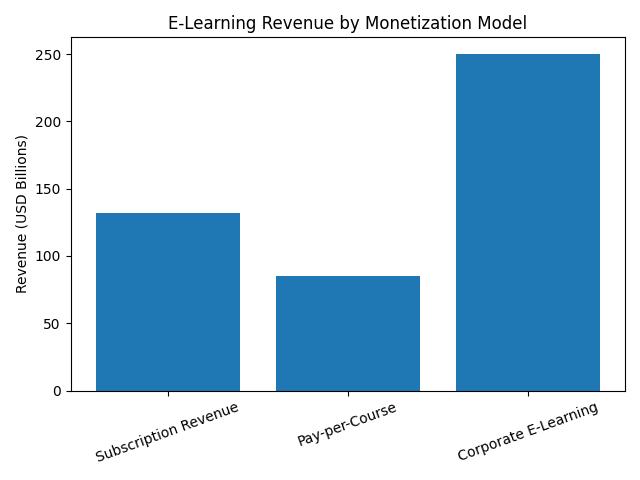
The e-learning industry’s revenue is distributed across different business models — showing that subscriptions and B2B/corporate training are major revenue drivers, which a good LMS must support.
Subscription Models Increase Lifetime Value
Recurring subscriptions provide predictable revenue. They require structured content release schedules and gated access systems.
An LMS must manage billing cycles, renewal notifications, and access control seamlessly.
When subscriptions operate smoothly, customer lifetime value increases significantly.
– Recurring Billing: Benefits for your Online Course
Corporate and Group Licensing
Many course providers overlook corporate training opportunities. Organizations require bulk enrollment, administrative dashboards, and reporting features.
A scalable LMS supports group management, progress tracking for teams, and downloadable performance reports.
Expanding into B2B markets increases revenue stability and reduces dependence on individual buyers.
– How to measure the effectiveness of your online business training
Community Features
Community features also contribute to monetization.
Community elements inside an LMS increase engagement and retention. Discussion forums, peer feedback tools, and live session integration foster belonging.
Belonging increases course completion. Completion increases referrals.
Organic referrals reduce acquisition cost.
A good LMS provides structured moderation tools and scalable communication channels.
Security and Trust Influence Purchase Decisions
Online education involves payment data, personal information, and intellectual property. Security breaches damage reputation permanently.
Professionals evaluating LMS platforms must ensure encryption, secure authentication, and compliance with relevant data protection regulations.
Visible security measures increase buyer confidence. Confidence supports higher price positioning.
Trust allows premium pricing.
A well-architected LMS reinforces that trust through performance reliability, secure transactions, and protected access to content.
– 5 Tips to Increase Online Courses Security
Well-Built LMS are a Long-Term Competitive Advantage

The online education market rewards reliability and structured growth.
A well-architected LMS provides a sustainable advantage. It supports expansion and aligns marketing, content delivery, and analytics within a unified system.
When infrastructure supports ambition, growth compounds.
A good LMS directly impacts your ability to sell more online courses. It influences conversion through performance and checkout clarity. It improves retention through structured onboarding and personalization. It increases lifetime value through subscriptions, corporate licensing, and data-driven upsells.
For professionals and decision-makers, the LMS should be viewed as strategic infrastructure.
It is not merely a content management tool. It is the foundation of scalable digital education.
Content attracts learners. Infrastructure keeps them.
Complete eLearning platform (LMS), Coursify.me is the ideal solution for anyone who wants to create, sell and promote courses on the internet.
Serving businesses and professionals in more than 60 countries, the platform offers a variety of customization options so you can create a virtual school with your “look”.
– Step by step to build a brand for your business
With a friendly and intuitive layout, anyone can use Coursify.me, either as teacher or student, without having to understand computing for this.
We offer three plan options for you to decide which one best suits your needs.
Developed for companies, with the Business Plan you customize your own domain and remove the Coursify.me brand from all your pages and courses.
In addition, we have an online support team ready to assist you and help you with any difficulty.
To know more, visit our website, test the platform and understand why we are the best option for your company.